a building project is a brand
Developers think in apartment types, plot sizes, and rental targets. Buyers think in addresses, names, and feelings. “We’re buying near the palace garden” is a sentence with meaning. “We’re buying in project 2017-04 phase 3 unit Top 14” is not.
It’s that gap that a project identity closes: a name, a logo, a colour code, a visual vocabulary across every touchpoint. From the rendering in the listing to the signage on the construction fence. When that holds together, a real-estate project sells differently.
what belongs to a project identity
For developers since 2010, we’ve worked from the same kit:
- Name & logo — short, memorable, retrievable
- Visualization line — time of day, weather, atmosphere consistent across all images
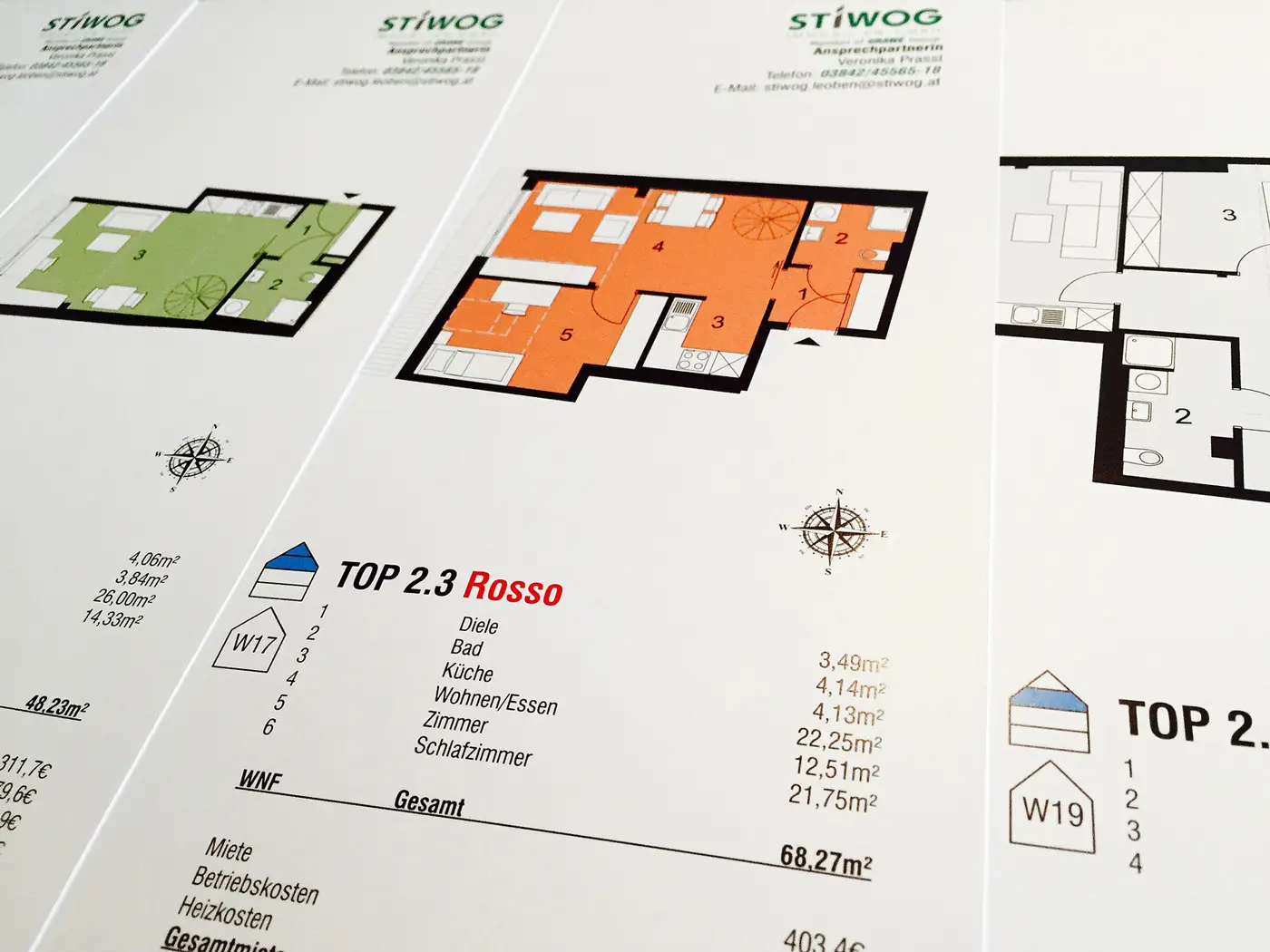
- Floor-plan layer — not technical hatching, but readable furniture suggestions
- Project brochure — a table of contents instead of a data desert
- Mini website — fast-loading, mobile-first, lead form
- Signage & construction fence — the physical counterpart to the online identity
Each piece can be bought separately. When they work together, sales velocity is measurably higher.
three examples across ten years
We’ve delivered this with different focal points, multiple times — from small row-house projects to larger developer brands in Graz. The constant: the logo doesn’t decide; consistency does. The moment the image frays anywhere along the buyer’s journey, trust starts to wobble.
Anyone curious to know more: our full-service marketing is exactly this kit, bundled.