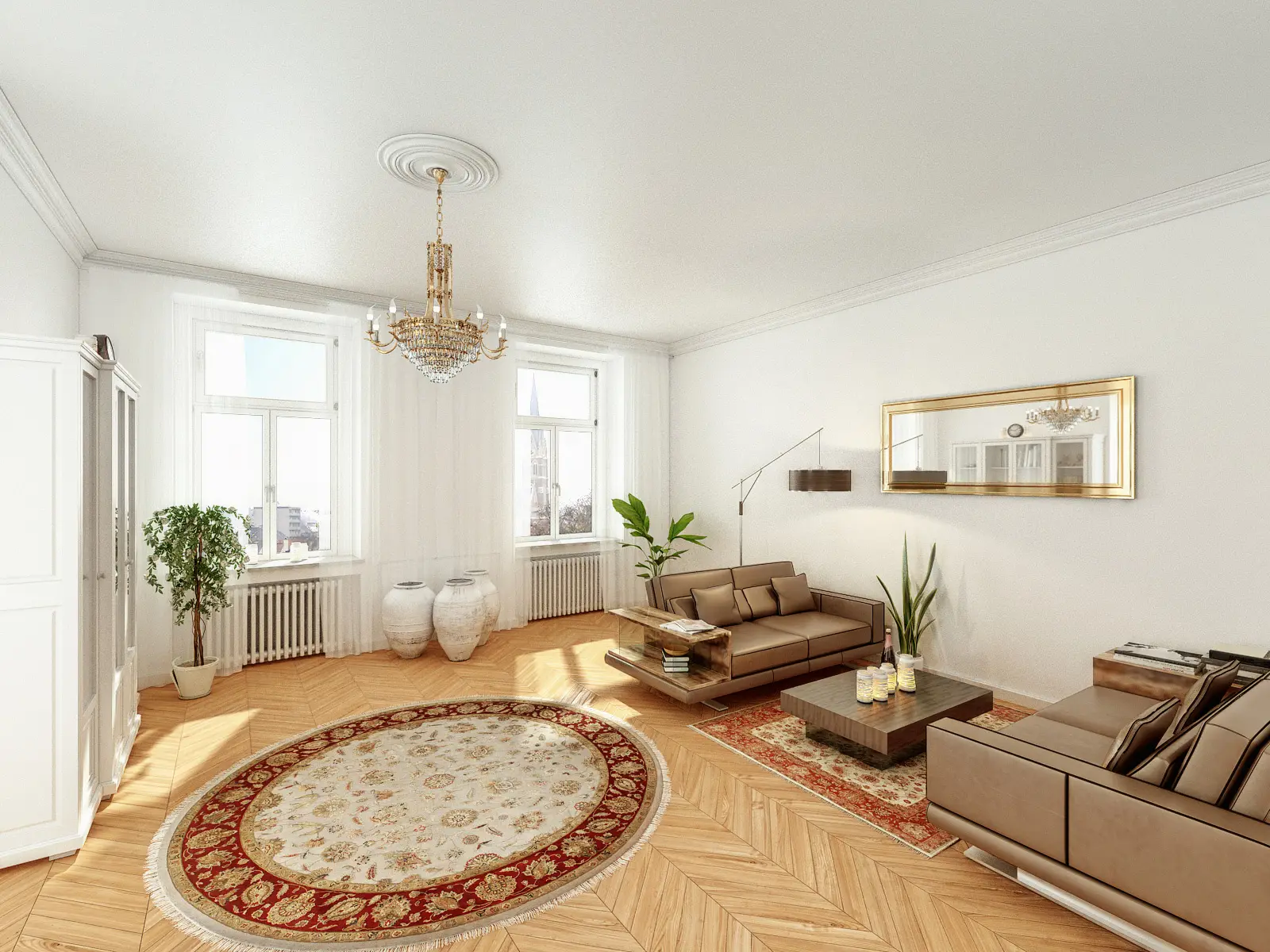
empty apartments sell worse
Agents have known this for a long time: an empty room with perfect dimensions loses against an equally sized room with furniture, light and atmosphere. A couch shows the living room is actually a living room. A dining table makes the dining area legible. A bed turns “bedroom-12-square-metres” into “this is where I could wake up.”
Physical staging — bringing in real rental furniture — is expensive and logistically heavy. 3D home staging is the digital path: the same photograph, the same rooms, but with 3D-furnished layers on top.
how it works technically
We take a photograph or 360° walkthrough of an empty apartment, model furniture matched to the perspective in 3D, integrate it pixel-precisely into the original image, and match light, shadows, and reflections. The result doesn’t look like a rendering with a couch dropped in — it looks like a real apartment viewing.
the predecessor of magic
What we did in 2014 with classic 3D tools, individually per object, is today partly automated in our Magic platform. Magic handles the repeatable steps (selecting furniture, placing it, lighting it) and gives agents a self-service tool for the quick cases.
But: for demanding objects — penthouses, showrooms, investor pitches — the hand-crafted 3D variant is still the gold standard. The underlying logic hasn’t changed: anyone photographing an apartment empty is selling it below value.