the backdrop — two events, one question
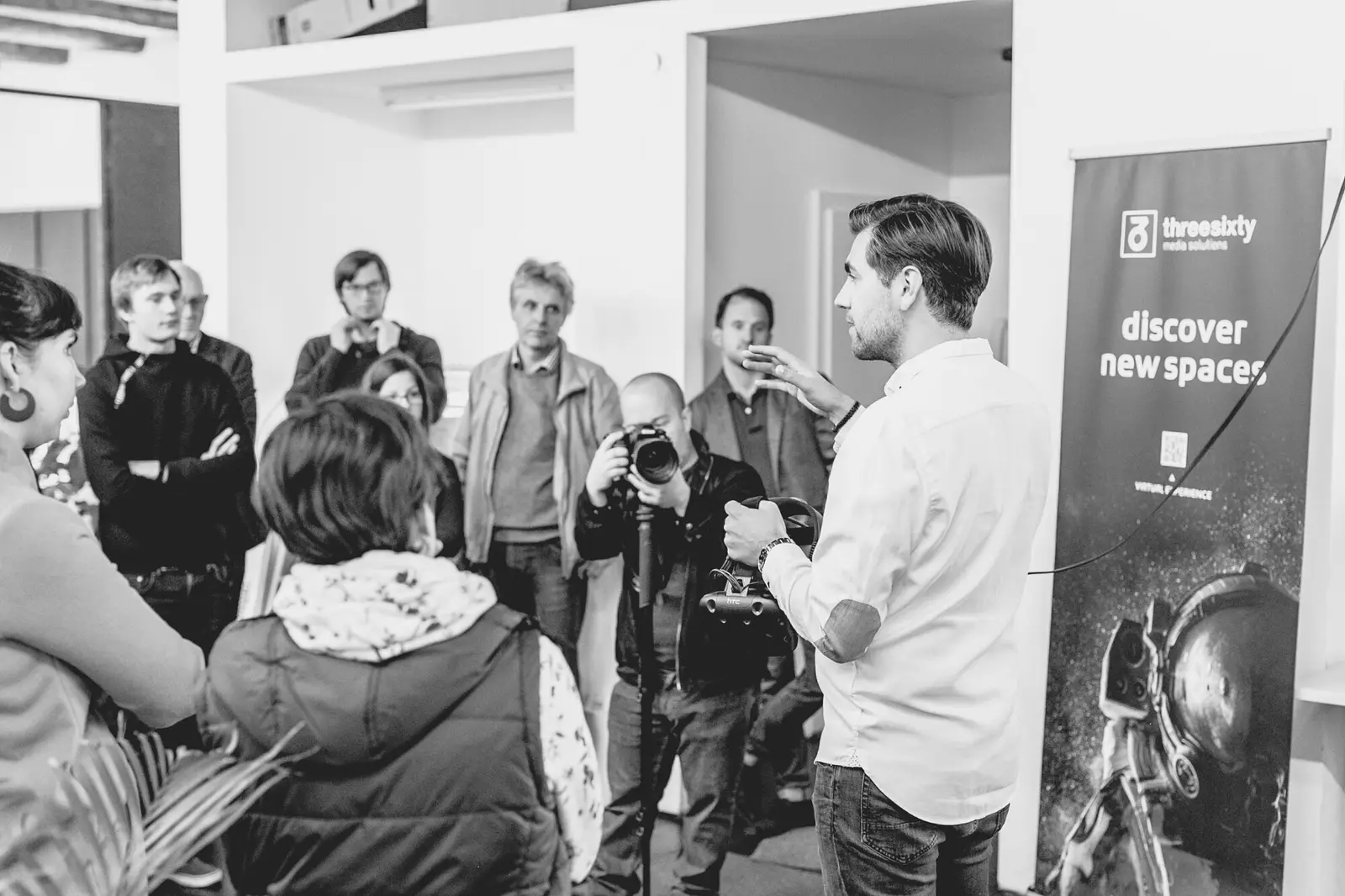
In April 2019, a delegation of Hungarian joiners, wood-construction entrepreneurs, and interior designers stood in our Graz office. The trip had been organised by the PANFA AIK Cluster in Sopron — a two-day study visit within the INTERREG V-A Austria–Hungary programme. The blunt question they brought: what are the Austrians actually doing with their wood industry, and what part of it is relevant for us?
Fourteen months later, in June 2020, the same question moved into a different setting. As part of the Spitzen!Leistung Holz initiative of the Holzcluster Steiermark, we co-hosted a webinar on “Digital sales & virtual product presentation”. No international study tour this time — just a sharp hour of live explanation for Austrian SMEs.
Both events revolved around one thing: how does virtual reality make something tangible for the wood industry that wasn’t tangible before?
what we showed
In the workshop with the Hungarian delegation we did not run generic tech demos. Instead, we ran a concrete case study: a real apartment walkthrough in VR. The delegation walked through the kitchen, looked into the walk-in closet, and stepped out onto the large balcony — where the table for a summer barbecue with friends was already set. A property-developer apartment that physically did not yet exist at that point.
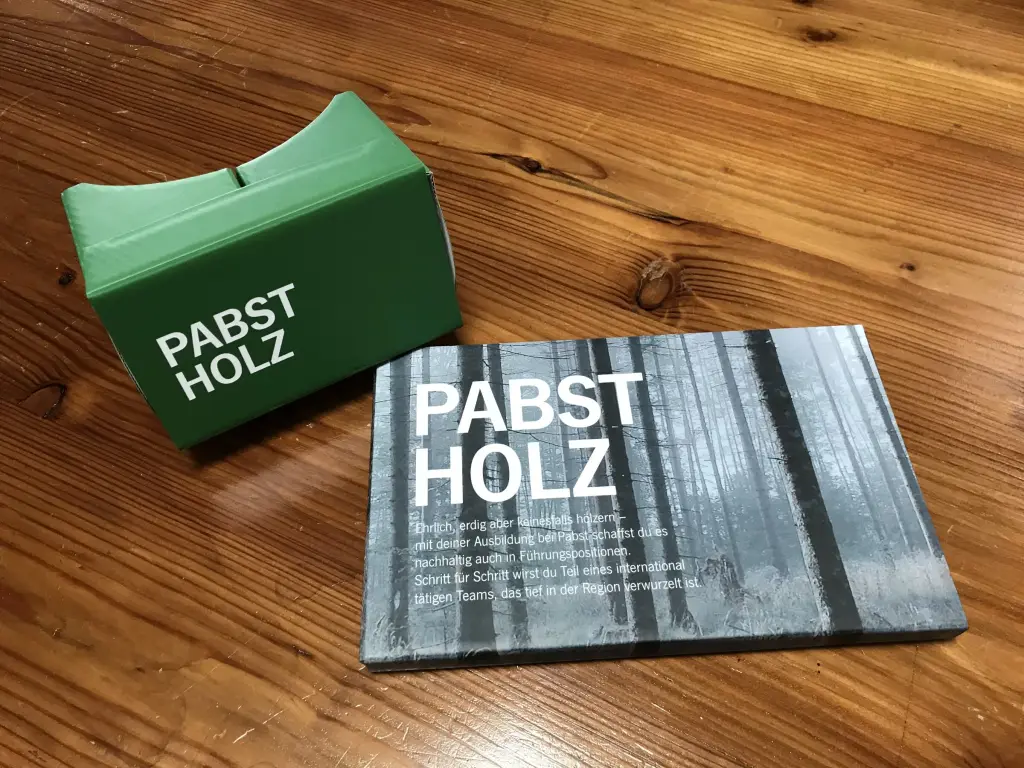
Alongside the VR walkthrough we showed the low-tech extension: a simple paper Cardboard viewer that buyers can slip their smartphone into. Start a YouTube video, put on the goggles, and the same walkthrough now works at the family’s kitchen table — no appointment, no agent.
In the 2020 webinar the focus was less on one application and more on the panorama: from a classic web shop (which an SME can set up and maintain themselves) all the way to virtual product worlds. The crucial point — co-delivered with Roland Oberwimmer of Holzcluster — was funding eligibility. Developing these tools is fundable via Spitzen!Leistung Holz. That changes the conversation: VR is no longer “exciting, but expensive”, it becomes “exciting, and fundable”.
what vr actually does in this industry
Three concrete fields we kept coming back to in both sessions:
1. Design reviews with architects and clients. In wood-construction projects, the gap between 2D plans and the actual experience is unusually big. Wood has grain, light reaction, room acoustics — none of which a floor plan transports. In VR the client sits inside the unbuilt room and says: “The window goes 30 cm lower.” That correction costs two hours in the VR model. On site, it costs a new component.
2. Prototype visualization in wood construction. Joiners can show furniture and fittings at 1:1 scale before the first board has been cut. This matters especially for custom pieces — where building a sample is not economical, but the decision still needs more than a drawing.
3. Interactive sales tools for wood-construction SMEs. Instead of the classic paper catalogue: an interactive 3D model in which the customer configures their own carport, canopy, or façade. Web-based, no plugin, no app store. It runs on any tablet in the sales conversation.
what we did not say
VR does not replace material samples. Anyone buying oak flooring will want to touch it. The right reading of VR in the wood industry is not “digital replacement” but “digital preliminary stage” — an opportunity to talk earlier, prepare decisions with less risk, and show in a sales conversation what cannot be put inside a glass cabinet.
The Hungarian travel report in Faipar magazine put it honestly: a young, agile team in central Graz that builds tools that are actually usable for joiners, interior designers, and wood-construction businesses. With the Holzcluster webinar, the international study visit became a concrete funding programme.
Six years later, VR has long since become part of our day-to-day work — the question has only shifted. It is no longer “what can VR do?” but “which tool fits which sales and production step?” That is exactly the conversation we like to have.